Godmother Death
- Region
- Kuyavia (Przedecz, Kłodawa)
- Record
- Kolberg, Lud III (1867), no. 21
- Length
- 13:44
- ATU / T
- T 332
This episode is recorded and waiting for its premiere.
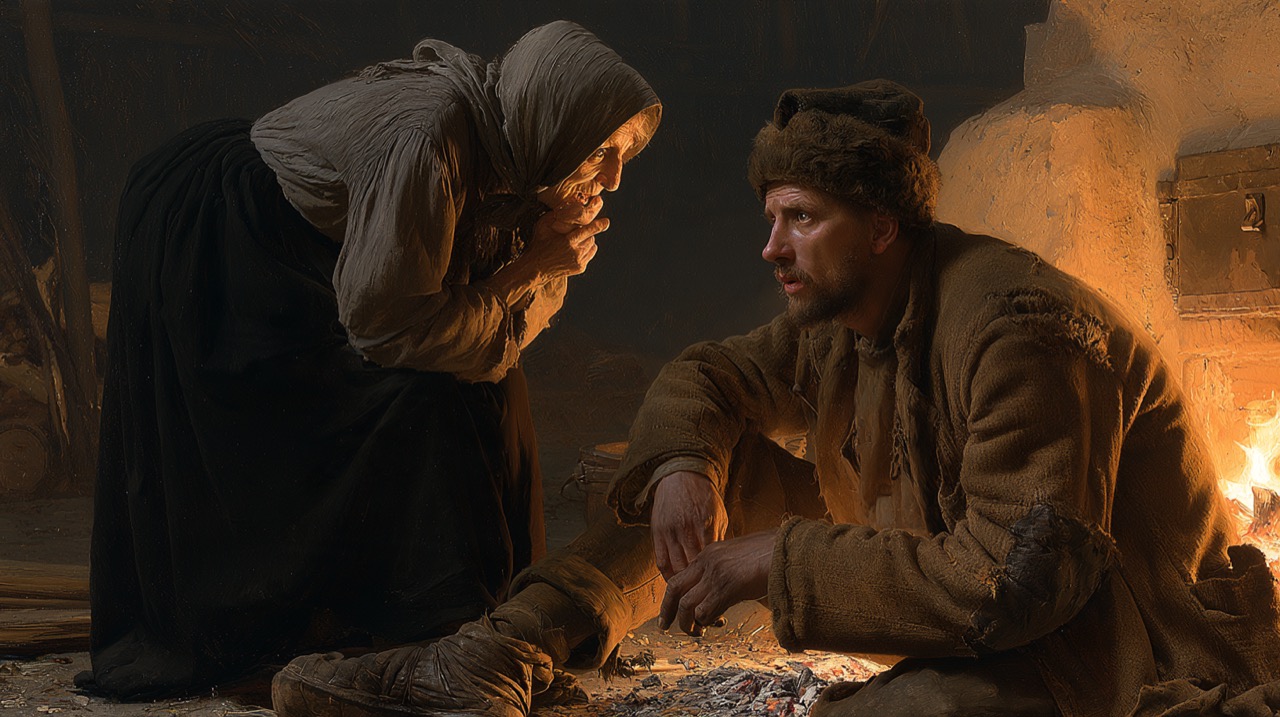
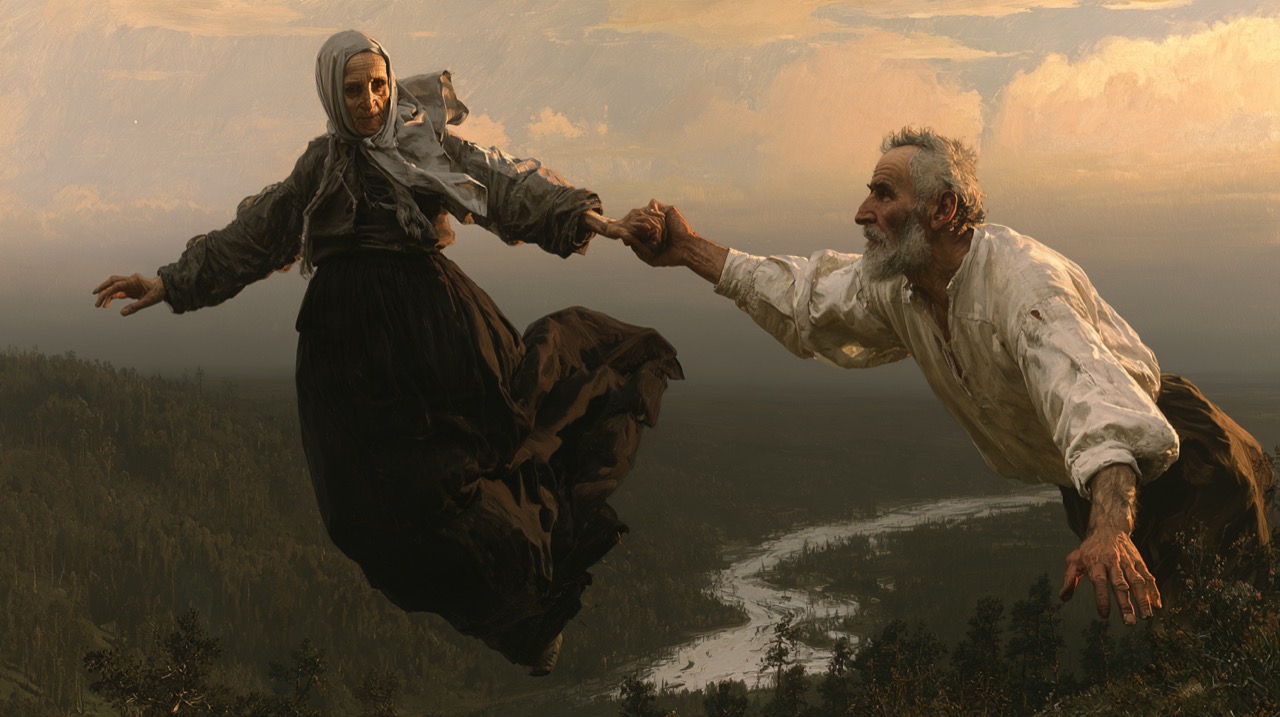
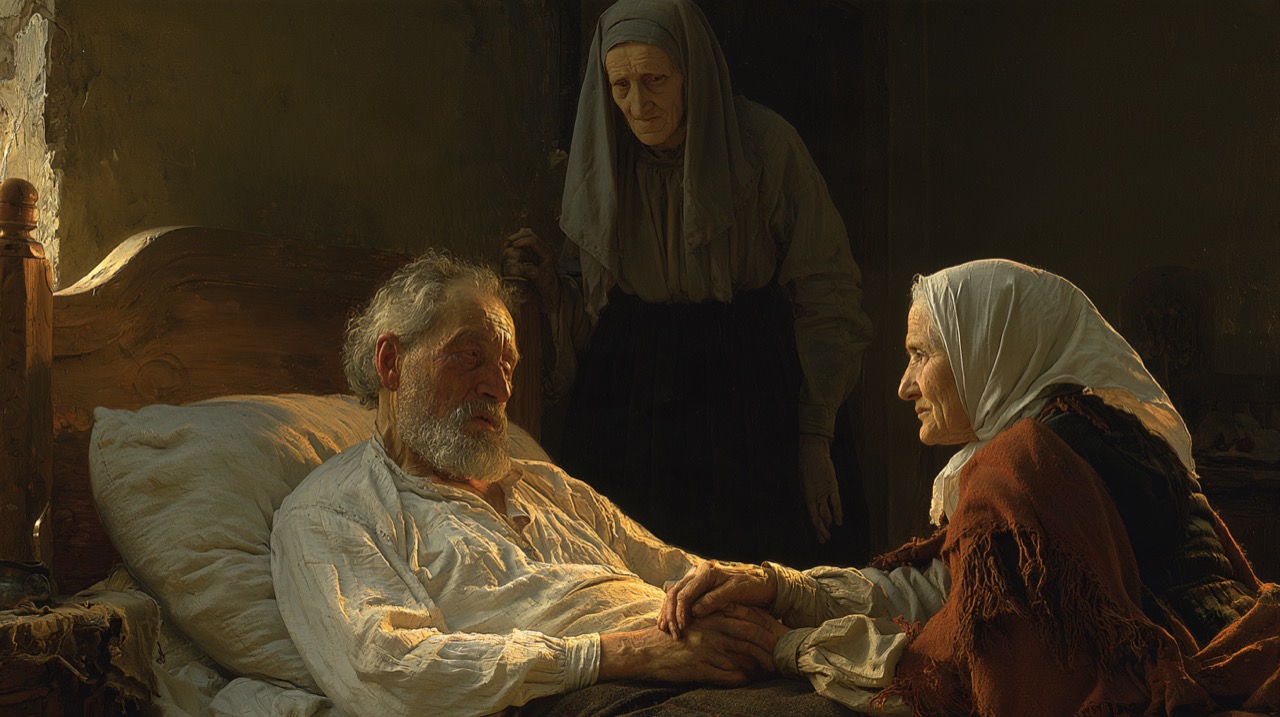
No one will stand godparent to a poor peasant’s latest child. At the crossroads a strange, gaunt woman agrees to it. After the christening she reveals who she is and gives him a gift: from now on he will always know whether the sick will rise again. The peasant becomes a famous doctor. Except that one day Death comes to stand by his bed as well.
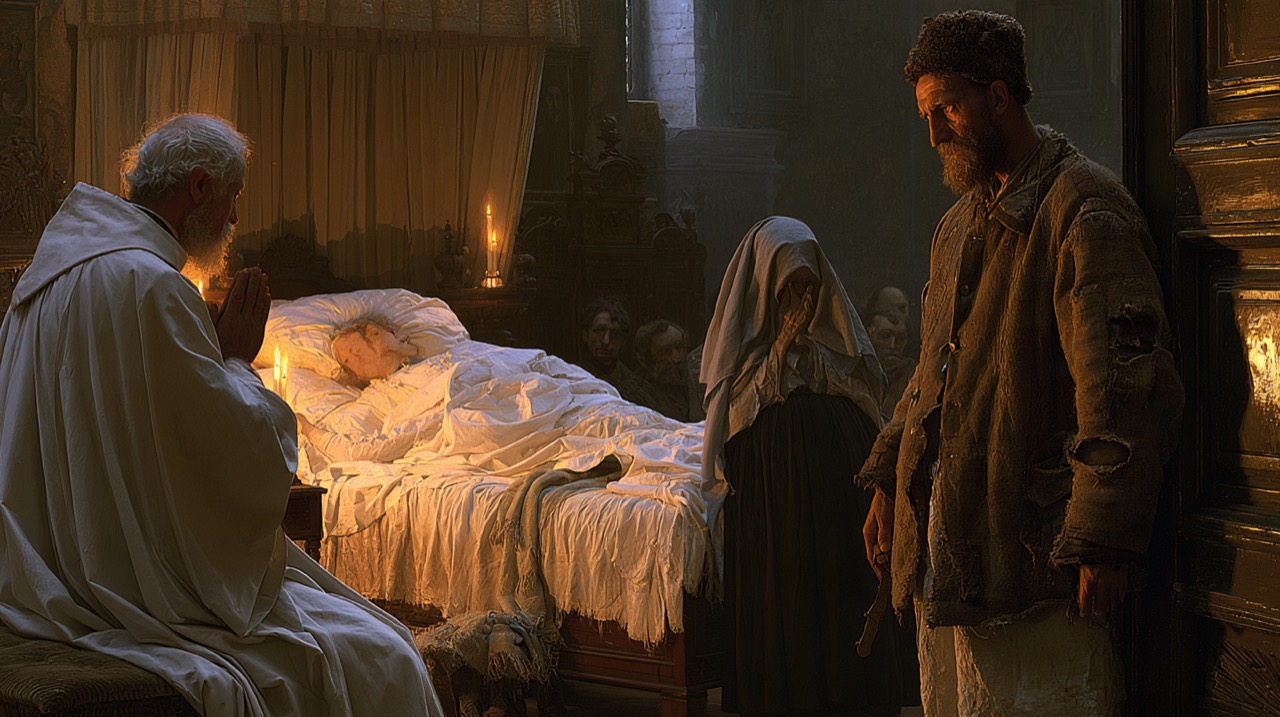
“Godmother Death” is tale type T 332 in Julian Krzyżanowski’s catalogue, one of the most popular magic tales in Poland. Its skeleton is almost always the same: a poor man looks for godparents, meets Death, and receives from her the gift of seeing where she stands by the sick. At the feet means the patient will recover; at the head, that they will die. Then he tries to outwit her.
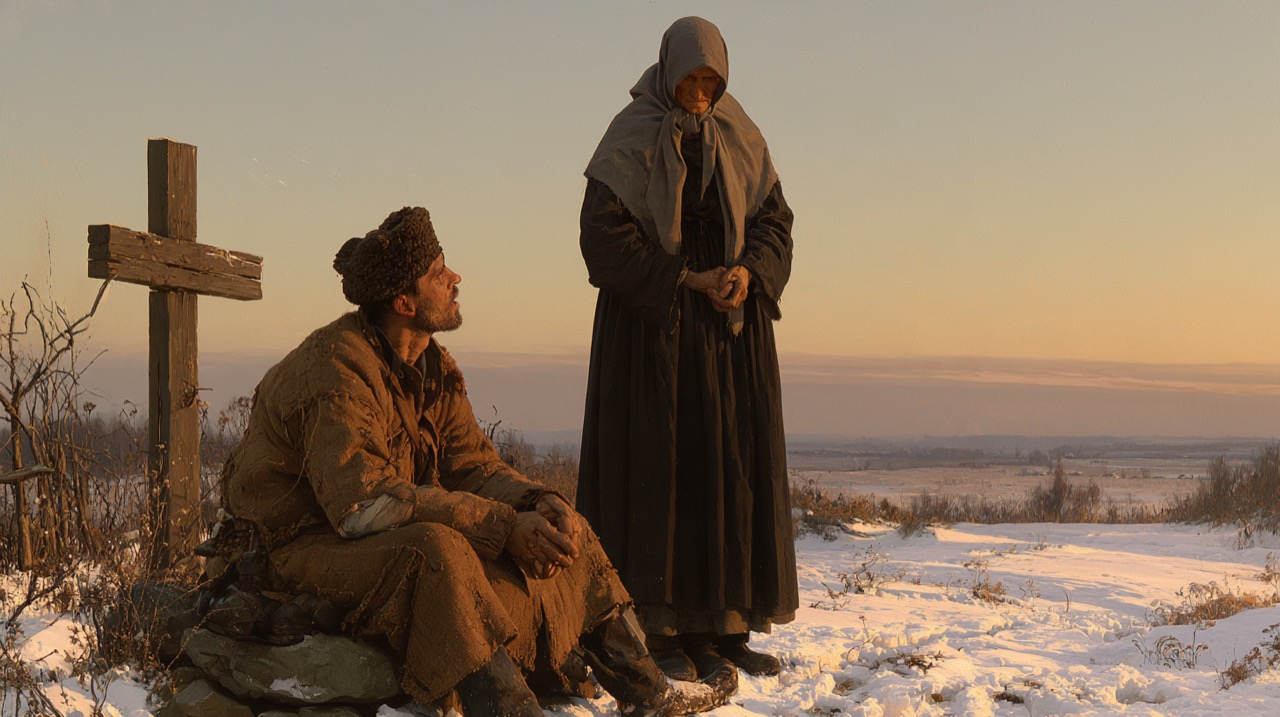
The Polish versions have a character of their own. Death is almost always a woman, a gaunt old woman met on the road or in the forest. She is not evil. She can even be kind, since it was she who offered help in poverty. The horror comes from something else: from her calm, and from a gift that turns out to be a curse. A doctor who sees Death must every day turn away from those who cannot be helped.
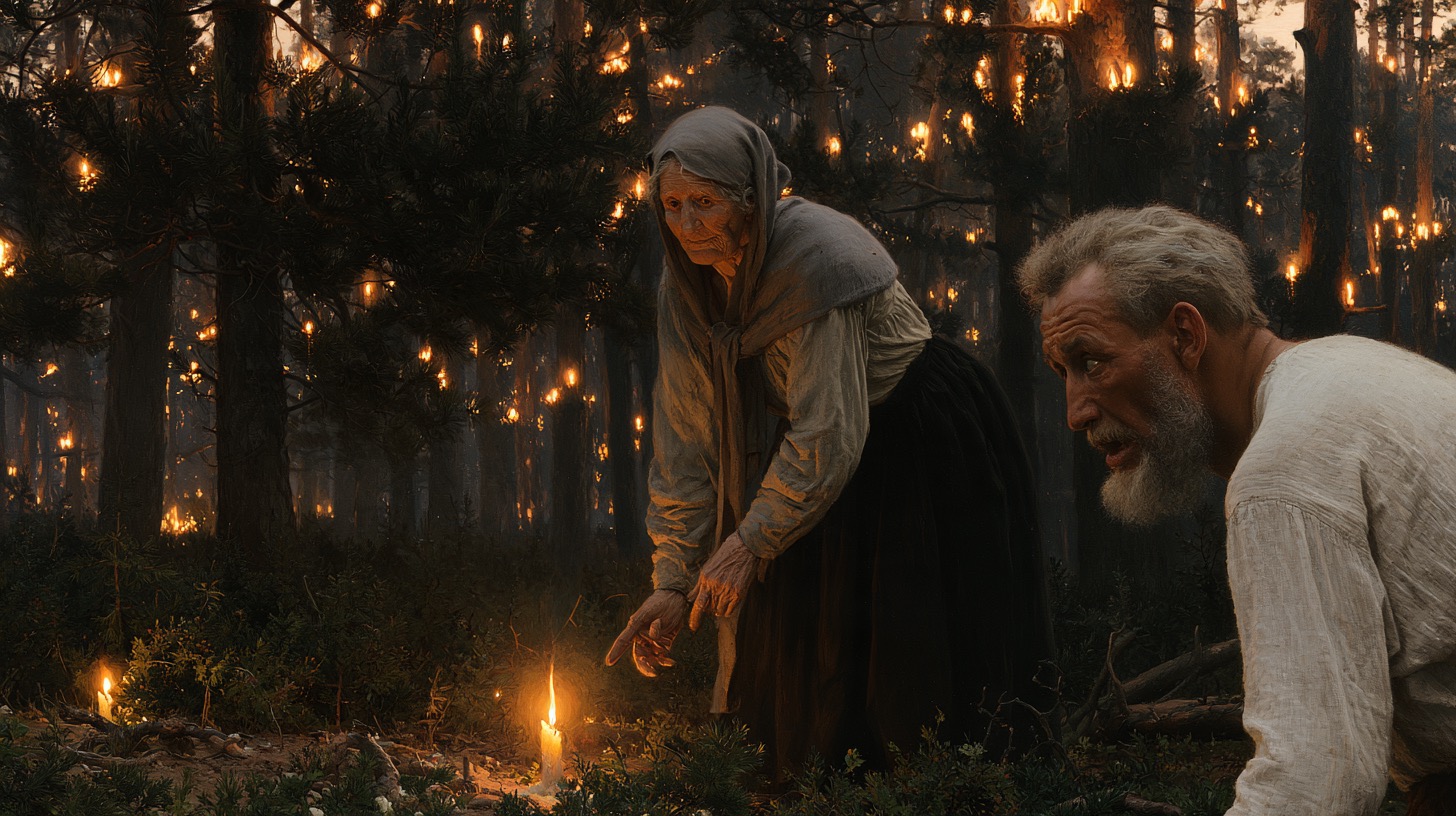
The tale is often joined by the motif of the candles of life: in a cave, in a mountain or in a dense forest candles burn, each one a human life. Endings vary. In pious versions the doctor confesses and dies in peace. In the Kuyavian one, Death chases him round a turning bed, finally seizes him by the head and strangles him. We chose the second.
Read the original
This story is built on records that are now in the public domain. You can read them for free in digital archives.
Illustrations
What the source says
- Oskar Kolberg, Lud, ser. III: Kujawy, cz. 1, Warszawa 1867, nr 21 „O śmierci”, s. 156–157.Polona ↗Public domain
- Oskar Kolberg, Lud, ser. VIII: Krakowskie, cz. 4, Kraków 1875, nr 54 „Śmierć i doktór (Świeczki żywota)”, s. 136–137.Polona ↗Public domain
- Sadok Barącz, Bajki, fraszki, podania, przysłowia i pieśni na Rusi, Tarnopol 1866, „Szewc”, s. 197–207.Bayerische Staatsbibliothek ↗Public domain
- Julian Krzyżanowski, Polska bajka ludowa w układzie systematycznym, t. 1, Wrocław 1962, wątek T 332.
- Hasło „Kuma-Śmierć” w: Słownik polskiej bajki ludowej, red. V. Wróblewska, UMK Toruń.bajka.umk.pl ↗
What we added
- The skeleton and the ending come from the Kuyavian version. The candles in the forest come from the version from Paczółtowice. The weeping on the road, the voivode’s wife with the chaplain, “kumciu serduńciu” (“godmother, my dear heart”) and the snuffed-out candle come from Barącz.
- Ours are: the account of the doctor’s years, people’s fear of his “nod”, the doctor reaching for someone else’s candle, and the storyteller’s last words.
- In Barącz the hero is a cobbler, and the whole tale is long and heavily embellished in a literary way. We took only a few scenes from it.